Managing regional complexity: why companies are choosing Panama as a strategic base for Latin America
Published 30 Marzo 2026
When companies evaluate expanding into Latin America, the key question is no longer where to enter, but where to govern complexity.
Fragmented regulations, heterogeneous markets, operational risks, and institutional asymmetries make regional execution one of the most challenging strategic moves for global and fast-scaling companies. In this context, Panama has increasingly positioned itself not as a tactical destination, but as a strategic control point for regional decision-making.
From market entry to regional governance
According to the Inter-American Development Bank (IDB), one of the main barriers to business growth in Latin America is not market size, but coordination costs and institutional fragmentation across countries, especially in regulated and high-impact sectors such as healthcare, financial services, logistics, and technology.
Source:
https://www.iadb.org/en/research-and-data/institutional-capacity-and-development-latin-america
As a result, companies expanding in the region increasingly prioritize locations that allow them to:
- Coordinate multi-country operations efficiently
- Engage with regulators and public institutions in a predictable manner
- Build long-term partnerships across sectors
- Reduce execution risk while scaling regionally
Panama offers a rare combination of these conditions, supported by decades of financial services development, international connectivity, and institutional continuity.
Panama’s role in regional business strategy
Panama consistently ranks among the most attractive economies for services-based and knowledge-intensive investment in Latin America. According to UNCTAD’s World Investment Report, the country remains a key recipient of foreign direct investment in logistics, financial services, and professional services.
Source:
https://unctad.org/publication/world-investment-report-2024
This positioning is reinforced by Panama’s role as a regional hub for multilateral organizations, international banks, and global trade, enabling companies to operate with regional reach from a single strategic base.
Ecosystems that reduce execution risk
Country-level advantages alone are not enough. Companies require ecosystems that translate macro stability into operational reality.
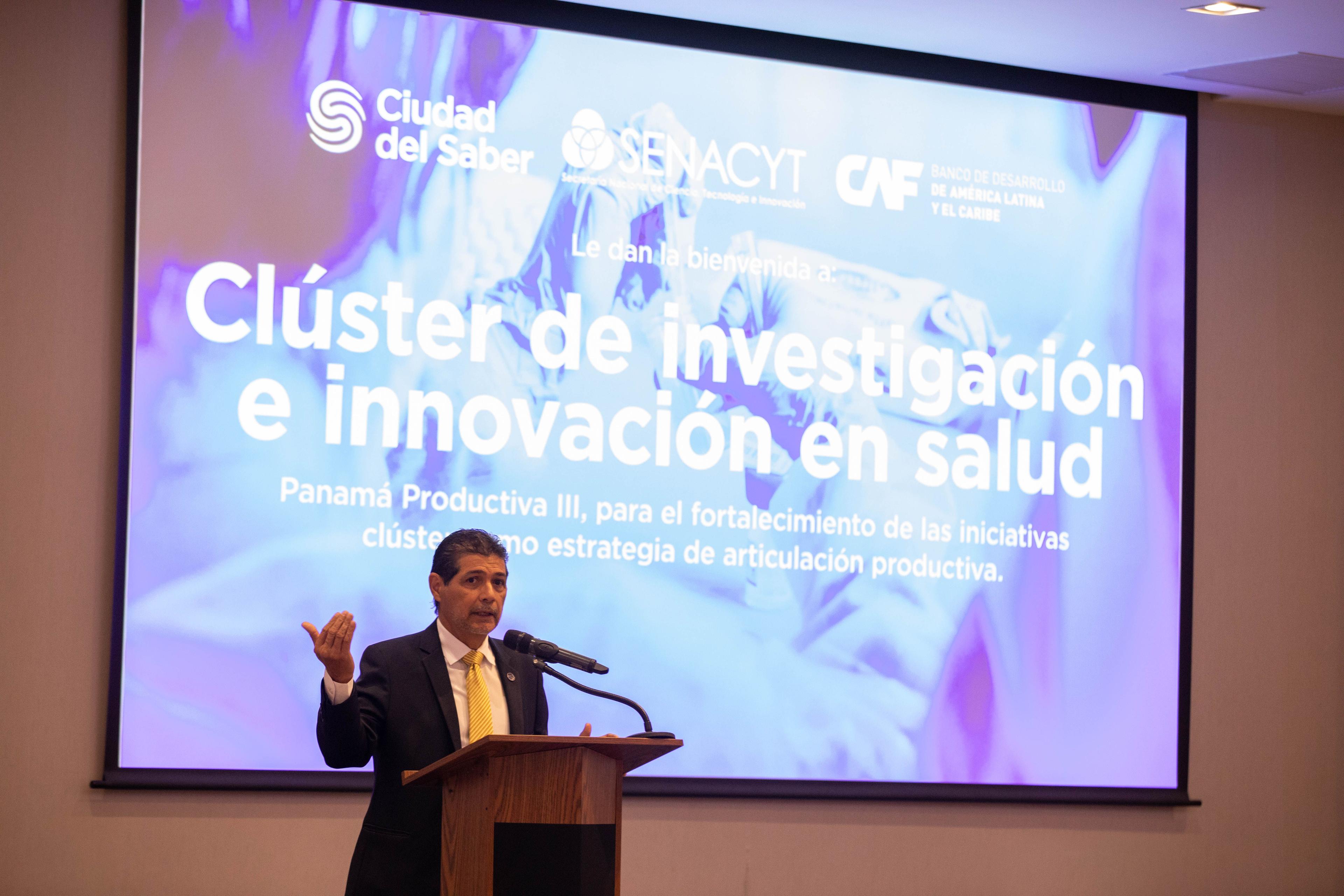
Ciudad del Saber plays a critical role in this context. As an innovation and knowledge ecosystem, it connects:
- International companies and regional headquarters
- Research centers and universities
- Public institutions, NGOs, and multilateral organizations
This convergence creates an environment where collaboration, regulatory dialogue, and innovation development can happen with lower friction, particularly for companies operating in health, fintech, education, and logistics.
Evidence of sustained confidence
Panama’s attractiveness is not driven by short-term incentives, but by its ability to support long-term regional strategies.
According to the World Bank, Panama consistently outperforms regional peers in logistics performance, ease of doing business in services, and international connectivity — factors that directly impact operational efficiency.
Sources:
- World Bank - Logistics Performance Index: https://lpi.worldbank.org
- World Bank - Panama Country Overview: https://www.worldbank.org/en/country/panama/overview
These structural advantages provide companies with a stable platform to manage growth, partnerships, and innovation across Latin America.
In today’s environment, expansion is not about speed, it is about control, trust, and execution capacity.
Panama’s strategic value lies in offering companies a place to govern regional complexity, while ecosystems like Ciudad del Saber provide the institutional depth required to scale with intention, credibility, and long-term vision.
For organizations planning regional growth, the question is no longer where to operate, but where to build from.
Managing regional complexity: why companies are choosing Panama as a strategic base for Latin America
Share the news